Why an Insurance Hail Damage Estimate Is Often Only the Starting Point
Why Hail Damage Estimates Change
When a vehicle owner receives an insurance estimate after a hailstorm, it is natural to assume that the document represents the complete cost and repair plan.
In many cases, however, the first insurance estimate is only the beginning of the process.
An initial estimate may be prepared from photographs, a brief exterior inspection, a drive-in estimating appointment, or the information that was visible before the vehicle entered a repair facility. It may not account for every dent, damaged molding, one-time-use fastener, access procedure, or required removal and reinstallation operation.
That does not necessarily mean the first estimate was prepared incorrectly. It means a complete hail repair plan often cannot be confirmed until the vehicle receives a thorough inspection under proper lighting.
At CD Dents in Midland, Michigan, we help vehicle owners understand the difference between an initial hail damage estimate and the detailed repair planning that happens before Paintless Dent Repair begins.
What Is Included in an Initial Hail Estimate?
An initial insurance estimate usually identifies the visible storm damage and provides a starting repair amount.
Depending on the inspection method, it may include:
- Paintless Dent Repair charges
- Conventional repair charges
- Panel replacement
- Damaged moldings
- Broken glass
- Labor operations
- Paint and materials
- Estimated dent counts
- Insurance deductible information
The amount shown may be based on the damage that the adjuster or estimator could reasonably document at that stage.
Hail damage is often difficult to see without clean panels, specialized lighting, and a consistent inspection process. A vehicle that appears to have light damage outdoors may show significantly more damage inside a properly lit repair facility.
Why Hail Dents Are Easy to Miss
Hail dents can become difficult to identify because of:
- Metallic or pearl paint
- Light-colored paint
- Dark reflections
- Dirt, pollen, or water spots
- Overcast weather
- Poor lighting
- Vehicle height
- Roof rails and moldings
- Closely grouped dents
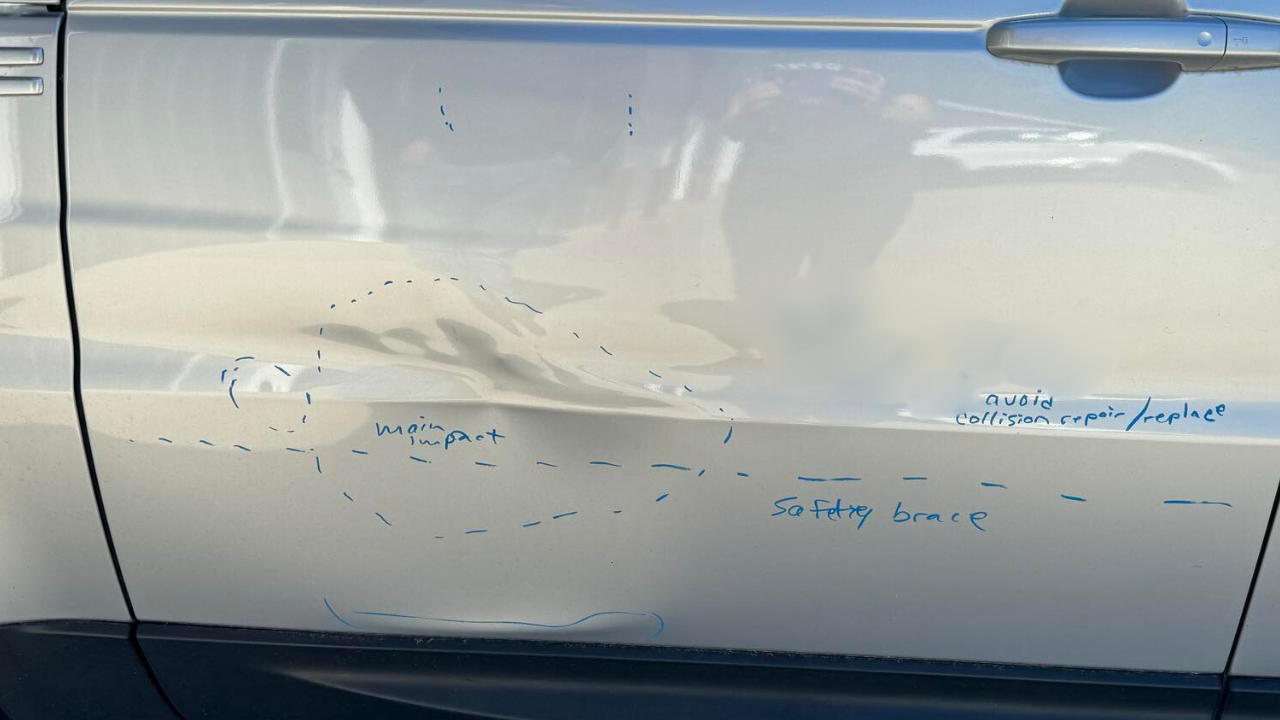
- Dents located near braces or bodylines
Damage on a roof, hood, or upper body panel may also look different depending on the viewing angle.
A proper hail inspection uses controlled lighting and reflection patterns to reveal the shape and location of each dent. The goal is not simply to count visible circles. The technician must evaluate the entire damaged area and understand how the panel has been displaced.
What Is a Hail Repair Supplement?
A supplement is an updated request for repair operations or costs that were not included in the original estimate.
During a professional inspection, the repair facility may identify additional items such as:
- More dents than originally documented
- Larger or deeper dents
- Damage on additional panels
- Dents located on bodylines
- Aluminum panel considerations
- Damaged moldings
- One-time-use clips or retainers
- Required trim removal
- Headliner removal and reinstallation
- Lamp removal
- Belt molding removal
- Roof rack or rail removal
- Restricted-access areas
- Conventional repair areas
- Paint damage that prevents a PDR-only repair
The repair facility documents the additional findings and submits the information for review.
The insurance company then determines what is covered under the policy and claim.
CD Dents is a repair company, not an insurance company or public adjusting firm. We document the repair-related items identified during our inspection, while coverage decisions remain with the insurer.
Why Access Operations Matter
Paintless Dent Repair is performed by carefully reshaping damaged metal. To do that correctly, the technician needs an appropriate repair path.
Some dents can be reached through factory openings. Others may require the temporary removal of nearby components.
For example, roof hail damage may require access behind portions of the headliner. Upper door dents may require removal of a belt molding or interior trim panel. A dent near a lamp may require the lamp to be removed so the technician can reach the back of the panel.
These operations are not unnecessary additions. They may be part of safely and effectively performing the repair.
A repair plan may need to account for:
- Removal and reinstallation labor
- One-time-use retainers
- Fragile moldings
- Manufacturer procedures
- Electrical connections
- Airbag locations
- Camera or sensor components
- Interior protection
- Reassembly checks
The exact needs depend on the vehicle and the location of the damage.
Why Moldings and Clips May Be Added Later
Exterior moldings and fasteners do not always survive removal.
Some clips are designed for one-time use. Some moldings use adhesive. Others can become distorted or damaged when removed, especially after years of sun exposure, weather, and temperature changes.
These items may not appear damaged during the first exterior inspection. Their replacement need may only become clear when the repair plan is developed or the component is removed according to the required procedure.
This is one reason the final repair amount may differ from the first estimate.
The Difference Between Damage Assessment and Repair Planning
An initial damage assessment answers:
What damage can currently be seen?
A complete repair plan answers:
What is required to properly complete the repair?
Those are related questions, but they are not always the same.
A detailed repair plan may consider:
- Damage severity
- Dent depth
- Dent grouping
- Panel material
- Tool access
- Glue-pull access
- Braces and reinforcements
- Interior removal
- Exterior trim
- Previous paintwork
- Paint condition
- Vehicle construction
- Replacement parts
- Recalibration concerns when applicable
The repair facility’s job is to identify the operations needed to complete the work safely and correctly.
Does a Supplement Mean the Repair Shop Is Increasing the Price?
A supplement should not be viewed as an arbitrary price increase.
It is a process used to address documented damage or operations that were not included in the first estimate.
For hail claims, supplements are common because the full extent of damage is not always visible during the initial inspection.
The repair facility should be able to explain why an additional operation is being requested and how it relates to the vehicle’s repair.
What Vehicle Owners Should Ask
When reviewing a hail estimate, consider asking:
- Was the vehicle inspected under professional PDR lighting?
- Were all damaged panels included?
- Were the dents counted after the vehicle was cleaned?
- Are there damaged moldings or trim pieces?
- Will interior or exterior components need to be removed?
- Are any fasteners considered one-time use?
- Are any panels aluminum?
- Is any damage too sharp, stretched, or paint-damaged for PDR?
- Will the repair facility communicate directly with the insurer about documented additions?
Clear communication can make the repair process much easier to understand.
Insurance Hail Repair in Midland, Michigan
CD Dents provides professional hail damage inspection and Paintless Dent Repair in Midland, Michigan.
We work with vehicle owners from Midland, Sanford, Saginaw, Bay City, Mount Pleasant, and surrounding Mid-Michigan communities.
Our role is to inspect the vehicle, explain the repair requirements, document the operations identified, and perform the approved repairs.
An insurance estimate is an important part of the process, but it may not be the complete repair plan.
Frequently Asked Questions
Why did the repair estimate increase after my vehicle reached the shop?
Additional dents, damaged parts, access operations, or one-time-use components may have been identified during a more detailed inspection.
Do all hail claims need a supplement?
No. Some original estimates include everything needed. Others require updates after additional damage or repair procedures are documented.
Does CD Dents decide what insurance will pay?
No. CD Dents documents the repair needs identified during inspection. Insurance coverage and payment decisions are made by the insurance carrier under the customer’s policy.
Can hail damage be estimated from photos alone?
Photos can provide useful information, but they may not reveal every dent, panel condition, access requirement, or damaged component.
Suggested Internal Links
- Hail Damage Repair
- Insurance-Friendly Repair Options
- Paintless Dent Repair
- Request an Estimate
- PDR Repair Process